AeroViation
Computational aerodynamics, airfoil dynamics and flight simulation
Project Overview
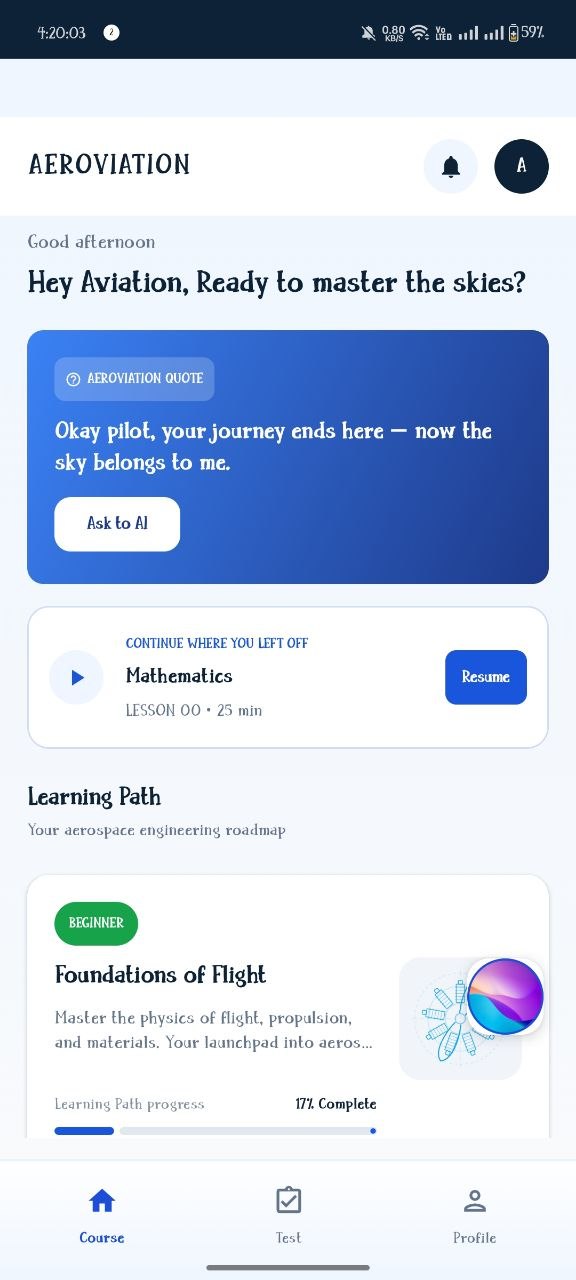
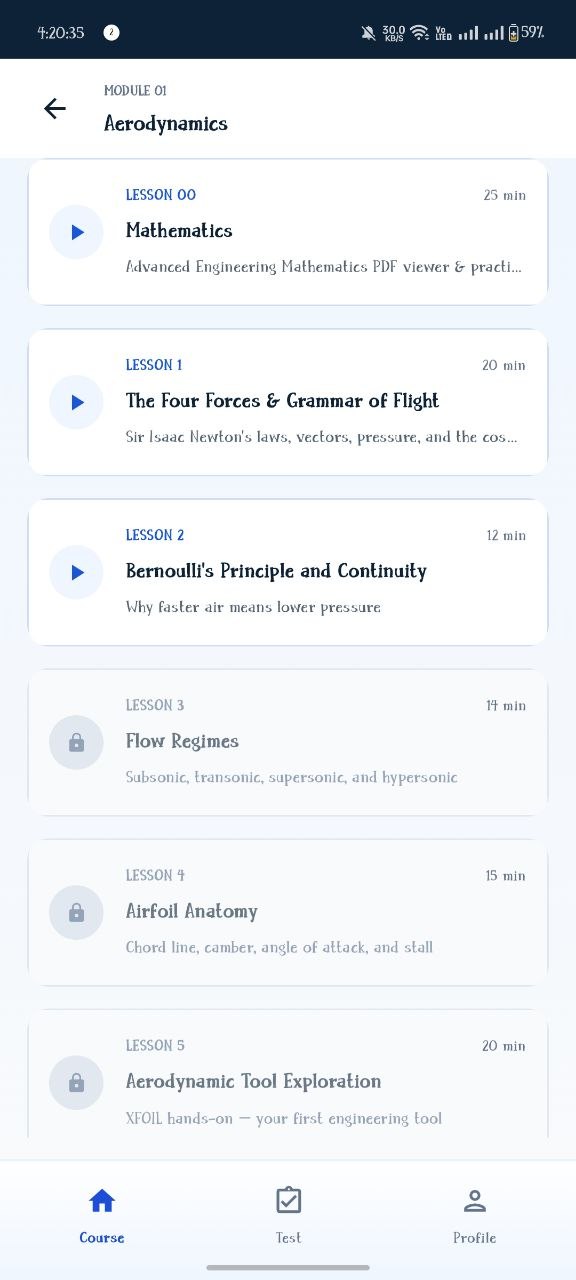
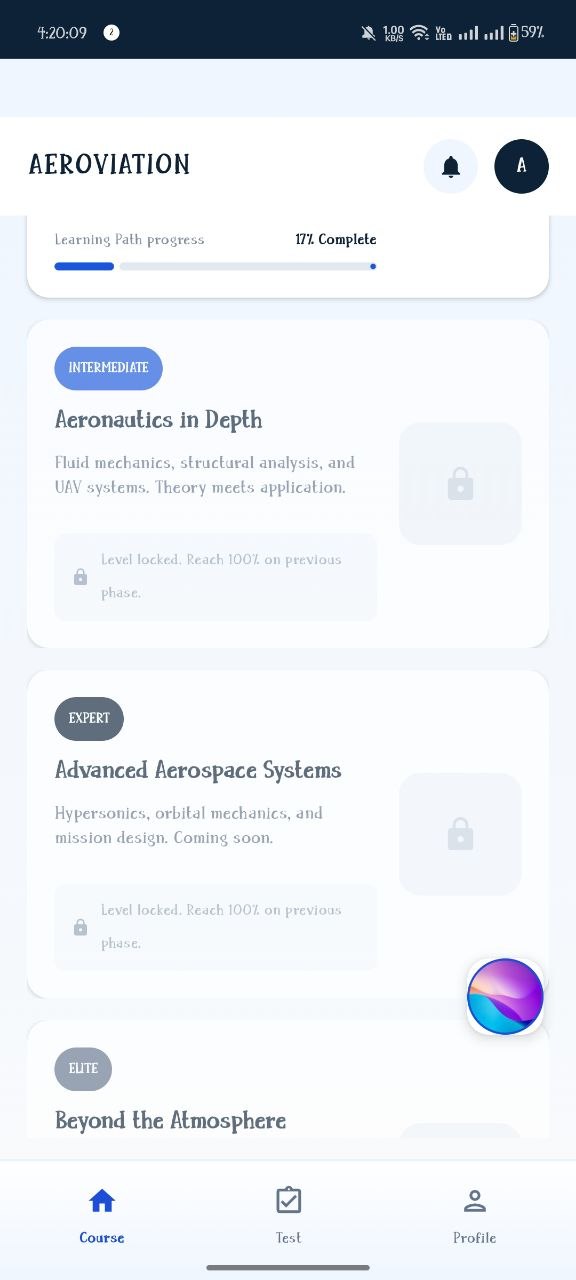
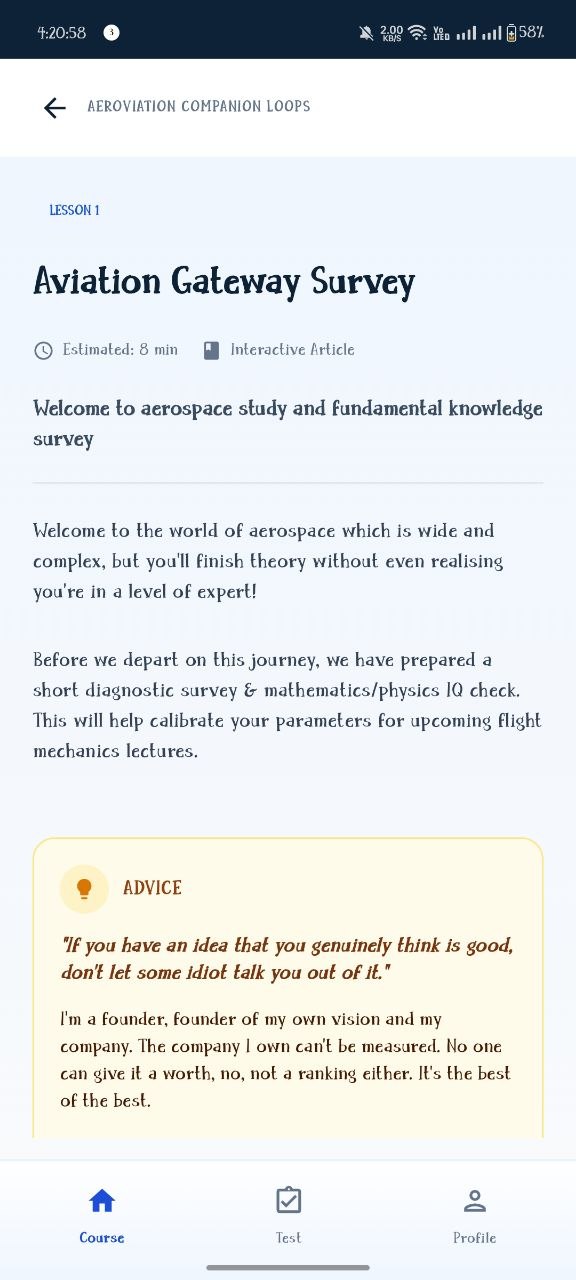
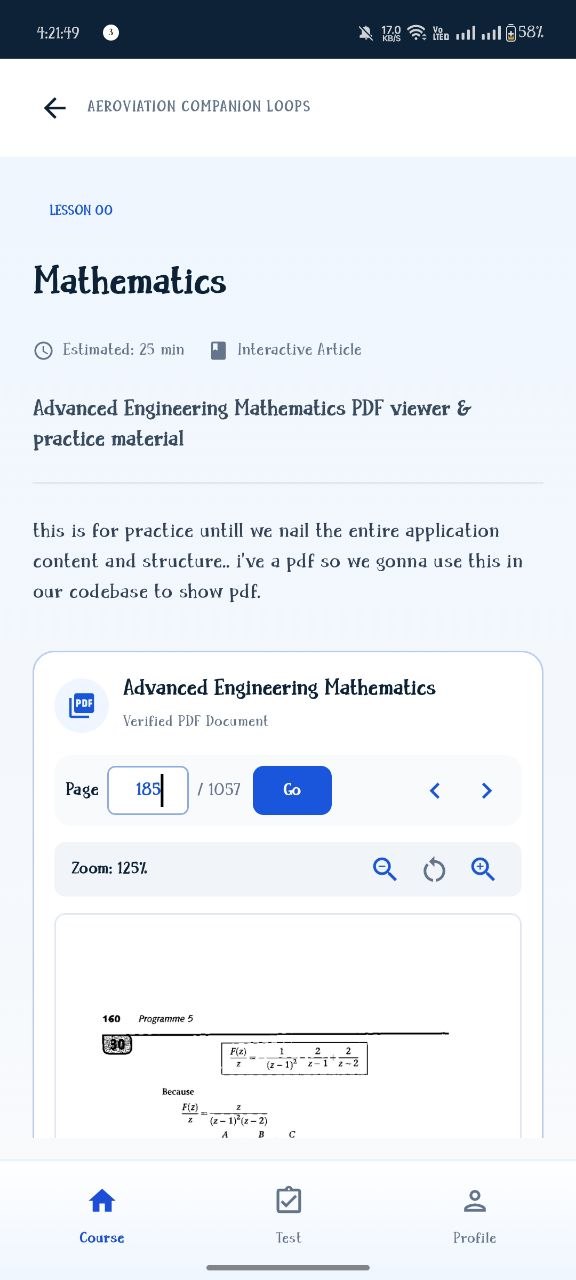
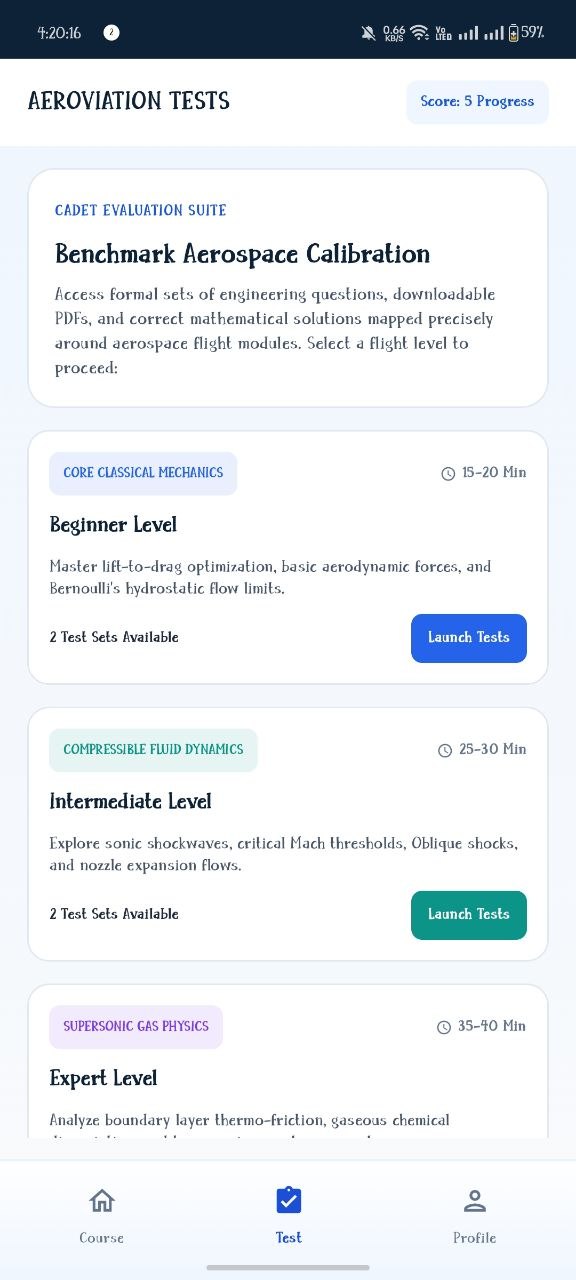
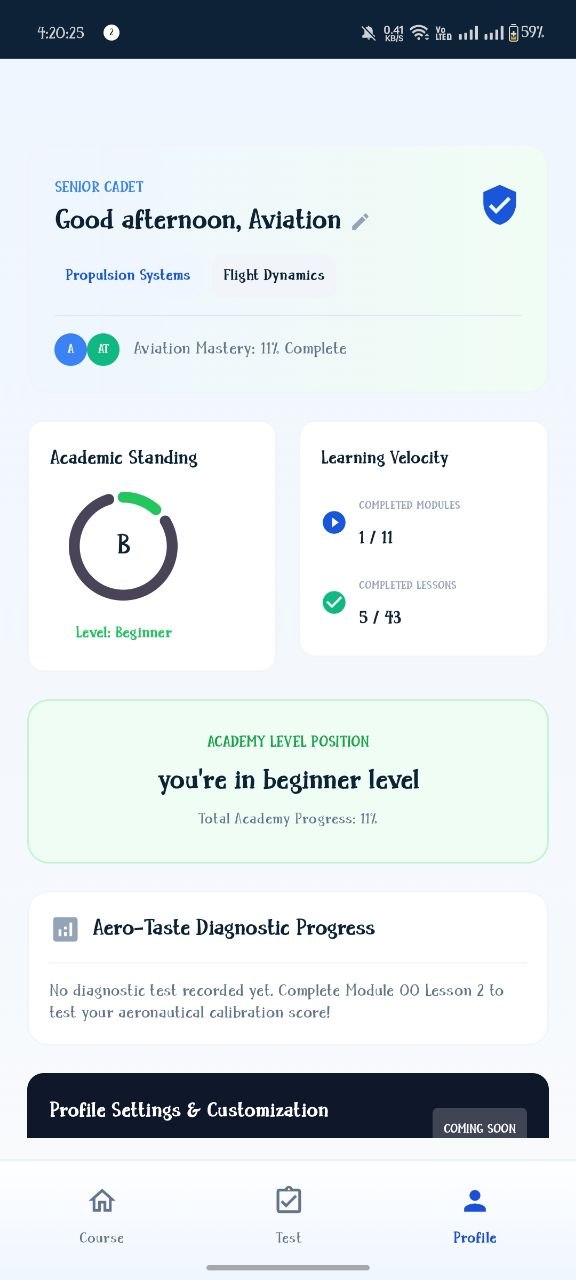
AeroViation is an android application which teach aerospace using faynmann style. It includes mostly entire undergraduate aerospace engineering. I have extracted information from different books and MIT lecture notes to keep things relative with the real world. I have divided entire course in level rather than rough textbook I tried to understand through videos, real questions paper and history alongside. It also includes open computational laboratory and simulation suite built to explore aerodynamic principles, airfoil performance characteristics (NACA profiles), lift-to-drag optimization, and flight mechanics. It transforms complex fluid dynamics mathematics into intuitive, visual software models.
The Challenge & Problem
Understanding fluid flow, boundary layer separation, and aerodynamic stalls requires either high-end wind tunnels or heavy commercial CFD packages with steep learning curves for students.
The Engineering Solution
Developed lightweight Python solvers and interactive visualizers using panel methods and OpenFOAM interfaces to calculate pressure distributions, Reynolds number sweeps, and polar curves.
System Architecture
- Hess-Smith 2D Panel Method solver written in NumPy for fast airfoil analysis
- Automated mesh generation script for OpenFOAM CFD pipeline
- Matplotlib & VTK-based 3D streamline visualization engine
- Data pipeline for aerodynamic coefficients (Cl, Cd, Cm) calculation
Key Capabilities & Features
- NACA 4-digit and 5-digit airfoil geometric coordinate generator
- Real-time pressure coefficient (Cp) distribution plot across angle of attack
- Polar drag prediction and glide ratio optimization calculations
- Exportable aerodynamic datasets for flight controller tuning
AeroViation — Visual Artifacts
Application screens, wireframes, presentations, and engineering artifacts from AeroViation.
To view my work, click the images above.